The Age-Old Culinary Debate: Skin On or Skin Off for Salmon?
Salmon, with its vibrant color, rich flavor, and abundant health benefits, is a staple in kitchens around the world. But before you sear, bake, or grill this magnificent fish, a fundamental question often arises: should you keep the skin on or remove it? This isn't just a matter of personal preference; the decision can significantly impact the texture, moisture, and even the nutritional profile of your final dish. While the German query "Lachs Haut Entfernen" (removing salmon skin) is a common search, the answer isn't always a straightforward "yes" or "no." In fact, often, the skin is your salmon's best friend in the pan.
For many home cooks, the idea of eating fish skin might seem unappetizing, conjuring images of slimy scales or tough texture. However, when cooked properly, salmon skin transforms into a culinary delight—crispy, savory, and full of flavor. Moreover, it plays a vital protective role during the cooking process. So, let's dive deep into the crispy vs. juicy dilemma and uncover when to embrace the skin and when it's best to bid it farewell.
The Crispy Advantage: Why Keeping Salmon Skin On is Often Best
Contrary to popular belief, salmon skin isn't just edible; it's a prized component for many chefs and home cooks, especially when aiming for specific textures and flavors. There are several compelling reasons why you should consider leaving the skin on your salmon fillet:
Flavor, Texture, and the Maillard Reaction
- Unmatched Crispiness: When seared correctly, salmon skin develops an incredible crispness that provides a delightful textural contrast to the tender, flaky flesh. This transformation is thanks to the Maillard reaction, a chemical process that occurs when amino acids and reducing sugars react, creating hundreds of new flavor compounds and browning the surface. A perfectly crispy skin adds a layer of complexity that an entirely skinless fillet simply cannot replicate.
- Enhanced Flavor: The skin, especially when browned, carries a rich, umami flavor that complements the salmon's natural taste. It's not just a texture; it's an additional flavor dimension to your meal.
Nutritional Powerhouse: A Hidden Gem of Omega-3s
Beyond taste and texture, salmon skin is a nutritional goldmine. Just beneath the skin lies a significant concentration of the healthy fats that salmon is renowned for:
- Omega-3 Fatty Acids: The majority of salmon's beneficial omega-3s, particularly EPA and DHA, are found in the fat layer directly beneath the skin. By removing the skin, you're discarding a substantial portion of these heart-healthy, brain-boosting fats.
- Collagen and Other Nutrients: Salmon skin also contains collagen, a protein vital for skin elasticity, joint health, and connective tissues. While the exact benefits of consuming collagen from fish skin are still debated, it certainly adds to the nutritional density. Additionally, the skin contains vitamins D and B, and minerals like selenium and phosphorus.
Protection During Cooking: A Natural Barrier
Perhaps the most practical reason to keep the skin on, especially for pan-searing or grilling, is its function as a natural protective barrier:
- Moisture Retention: The skin acts as a shield, preventing the delicate flesh of the salmon from drying out during cooking. When you cook skin-side down first, the skin creates a buffer between the heat source and the fillet, allowing the fish to cook gently and retain its natural juices and fats. If you remove the skin before cooking, especially frying, the salmon is prone to losing water and fat, resulting in a drier, less flavorful end product.
- Structural Integrity: The skin helps the fillet maintain its shape, preventing it from flaking apart prematurely as it cooks. This is particularly helpful when handling and flipping the fish.
For cooking methods like pan-searing, grilling, or oven-roasting, keeping the skin on is almost always recommended to achieve that coveted crispy exterior and succulent interior. You simply season the fillet, place it skin-side down in a hot pan with a little oil, and let the skin crisp up beautifully before a quick flip to finish cooking.
When to Bid Farewell to Salmon Skin: Practical Scenarios
While the benefits of keeping salmon skin on are numerous, there are specific culinary situations where removing the skin is the preferred, or even necessary, approach. The key lies in understanding how the cooking method and desired outcome interact with the skin's properties.
Cooking Methods Unsuited for Skin
- Poaching or Steaming: In these gentle, moist heat methods, salmon skin will not crisp up. Instead, it will become soft, gelatinous, and unappetizingly chewy. For poached or steamed salmon, the texture of the skin would detract from the delicate flavor of the fish.
- Baking or Roasting (Without Direct Heat): If you're baking salmon in a foil packet, covered, or at a lower temperature without direct exposure to high heat on the skin, it will likely remain soft and unappetizing. While oven-roasting at a higher temperature can crisp skin, methods that trap moisture are better suited for skinless fillets.
- Raw Preparations (Sushi, Sashimi, Tartare): For dishes where salmon is served raw, like sushi, sashimi, or tartare, the skin is always removed. Its texture and flavor would be completely out of place in these delicate preparations.
- Finely Diced or Mixed Dishes: When preparing salmon for dishes like pasta sauces, creamy casseroles, fish cakes, or spreads, where the fish is flaked or diced and combined with other ingredients, the skin should be removed. Its presence would interfere with the uniform texture and mouthfeel of the dish.
- Marinating for Extended Periods: While the skin acts as a barrier, in some marinating scenarios where the marinade needs to penetrate deeply or for an extended period, a skinless fillet might absorb flavors more readily and evenly.
Personal Preference and Dietary Considerations
Beyond cooking methods, personal preference also plays a significant role. Some individuals simply dislike the texture or taste of salmon skin, regardless of how it's prepared. Others may have specific dietary restrictions or preferences that lead them to discard the skin.
Mastering the Art of Salmon Skin Removal (Lachs Haut Entfernen)
When the occasion calls for skinless salmon, knowing how to properly remove the skin is a valuable skill. A clean, efficient removal ensures you get the most yield from your fillet without damaging the delicate flesh. The process of "Lachs Haut Entfernen" is relatively straightforward once you get the hang of it.
Essential Tools: The Sharp Knife is Key
You'll need just two things:
- A Large, Sharp Knife: This is non-negotiable. A sharp, flexible fillet knife or a long, thin slicing knife is ideal. A dull knife will tear the flesh and make the job messy and frustrating.
- A Sturdy Cutting Board: To provide a stable surface for safe and precise cutting.
Step-by-Step Guide to Skin Removal
Ensure your salmon fillet is either fresh or fully thawed. Chilling the fish for about 15-20 minutes before starting can also make the skin firmer and easier to grip.
- Position the Fillet: Place the salmon fillet on your cutting board, skin-side down. Orient it so that one of the longer edges is facing you, or place it with the wider end towards you.
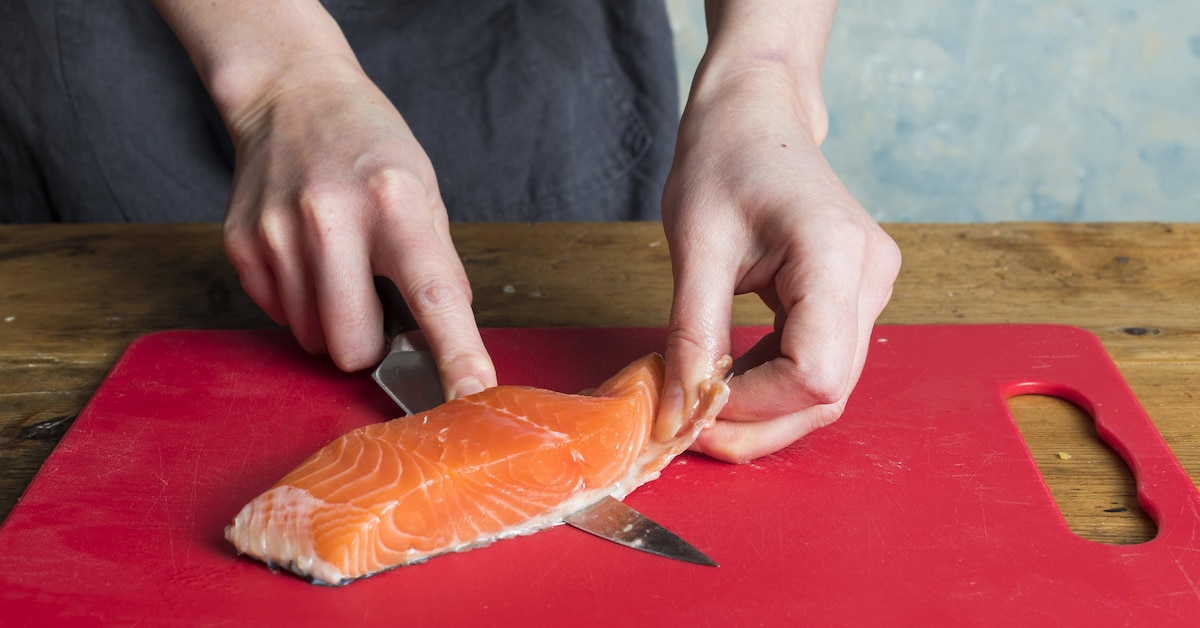
- Make the Initial Incision: Starting from one of the narrower ends (the tail end is often easiest), make a small, shallow cut between the skin and the flesh. Insert your knife blade at a very shallow angle, aiming to separate just a small piece of skin from the fillet. Create a small "tab" of skin that you can firmly grip.
- Grip the Skin Firmly: With one hand, firmly grip the skin tab you've created. Many chefs find that using a paper towel to grip the skin provides extra traction and prevents slippage.
- Slice and Separate: With your other hand, hold your sharp knife almost parallel to the cutting board, positioned just above the skin and below the flesh. Begin to slice the fillet away from the skin, moving the knife in a gentle sawing motion, or ideally, a smooth, gliding motion if your knife is exceedingly sharp.
- Maintain Tension and Angle: As you slice, continuously pull the skin taut with your gripping hand. This tension is crucial for a clean separation. Keep your knife blade angled slightly downwards towards the skin, ensuring you're removing as little flesh as possible.
- Glide Through: Continue to pull the skin and guide the knife from one end of the fillet to the other. The goal is to separate the entire fillet from the skin in one smooth, continuous motion. If your knife is sharp enough, it should feel like it's gliding effortlessly between the skin and the flesh.
Once you've mastered this technique, you'll find that effortless salmon skin removal becomes second nature, giving you perfectly skinless fillets whenever your recipe demands it.
Beyond the Basics: Expert Tips for Perfect Salmon Every Time
Whether you choose to keep the skin on or take it off, a few expert tips can elevate your salmon cooking:
- Pat Dry, Always: For crispy skin, or for even searing of skinless fish, always pat your salmon fillets thoroughly dry with paper towels before seasoning and cooking. Excess moisture is the enemy of crispiness and can lead to steaming rather than searing.
- Season Liberally: Salmon benefits from generous seasoning. Salt and freshly ground black pepper are essentials, but feel free to experiment with herbs, spices, or marinades that complement its rich flavor.
- Don't Overcrowd the Pan: When pan-searing, cook salmon in batches if necessary. Overcrowding cools the pan, leading to steaming and preventing proper browning and crisping.
- High Heat for Skin: If cooking skin-on, start with medium-high heat. This ensures the skin crisps up quickly before the flesh overcooks. Apply pressure gently with a spatula for the first minute to ensure full contact between the skin and the hot pan.
- Rest Your Fish: Just like meat, salmon benefits from a brief resting period (2-5 minutes) after cooking. This allows the juices to redistribute, resulting in a more tender and moist fillet.
The choice to keep or remove salmon skin largely depends on your intended cooking method and desired texture. By understanding the advantages of crispy skin and the scenarios where it's best removed, you can make informed decisions that lead to perfectly cooked salmon every single time. For more insights into this culinary decision, you can explore our guide on Should You Remove Salmon Skin? When to Keep or Discard.
Conclusion: Empowering Your Salmon Choices
The debate between crispy skin and juicy fillet isn't really a debate at all—it's about understanding the versatility of salmon and making the right choice for your dish. Whether you're aiming for that irresistible crackling skin on a pan-seared fillet or a smooth, tender piece for a delicate sauce, knowing when and how to perform "Lachs Haut Entfernen" (removing salmon skin) or, conversely, celebrating its presence, empowers you in the kitchen. Embrace the healthy fats, the textural contrasts, and the sheer deliciousness that salmon, with or without its skin, brings to your plate. Happy cooking!